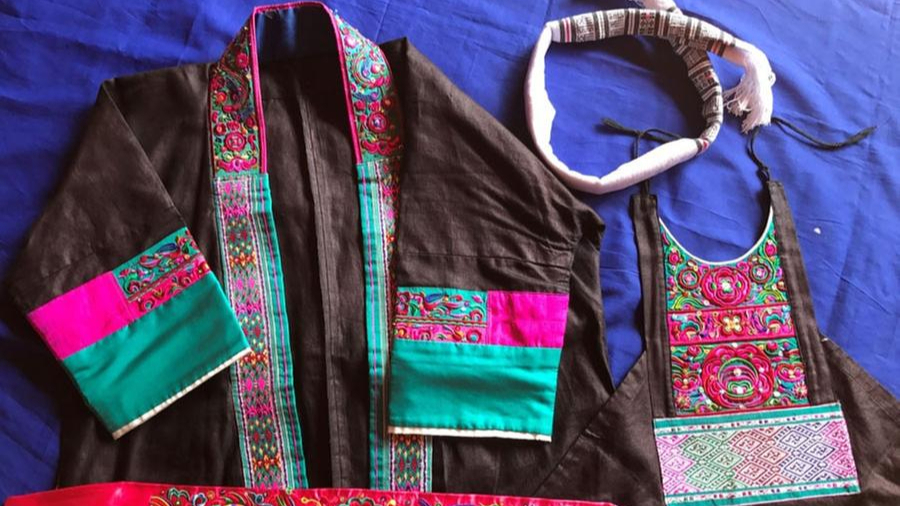
Dong Brocade
Overview
Dong brocade, locally known as "dongjin," is a traditional textile craft of the Dong ethnic group in China. Renowned for its rich colors and intricate patterns, this art form has been passed down through generations for over 2,000 years. Dong brocade is more than just a craft; it is a cultural heritage that reflects the history, traditions, and artistic sensibilities of the Dong people. The weaving process is labor-intensive and requires a high level of skill, making each piece a unique and valuable creation.
Historical Background
The origins of Dong brocade date back over two millennia, with the craft traditionally taught from mothers to daughters within the Dong ethnic community. This heritage textile is deeply rooted in the cultural fabric of the Dong people, symbolizing their identity and artistic expression. Historically, Dong brocade was used for clothing, accessories, and ceremonial purposes, showcasing the community's creativity and craftsmanship. Despite its historical significance, the practice of weaving Dong brocade has faced challenges in modern times, with fewer women in rural areas continuing the tradition due to economic pressures and migration to urban centers.
Weaving Techniques and Characteristics
The creation of Dong brocade involves the use of a manual loom, requiring the weaver to coordinate movements of both arms and feet. The process is meticulous and time-consuming, with skilled artisans taking nearly a month to complete a single scarf. The brocade is distinguished by its vibrant colors and elaborate patterns, which often feature motifs inspired by nature and Dong cultural symbols. Each piece is a testament to the weaver's dedication and expertise, embodying the spirit of the Dong people.
Preservation and Revival Efforts
In recent years, efforts have been made to preserve and revive the art of Dong brocade. Su Tianmei, a prominent figure in this movement, has played a pivotal role in revitalizing the craft in Wenpo village, Tongdao Dong autonomous county, Hunan province. Born with a passion for brocade, Su began learning the craft from her mother at the age of 12 and became proficient by 15. Despite challenges, including financial instability and social pressures, Su remained committed to her dream of preserving Dong brocade.
In 2008, Dong brocade was recognized as a national intangible cultural heritage in China, and Su was named its official inheritor. She established the Xiongguan Dong brocade workshop in 2009, using her savings to provide training and opportunities for local women. Over 4,000 women have since learned the craft under her guidance, enabling them to earn a livelihood while preserving their cultural heritage. Su's efforts have also included collaborations with Hunan University's School of Design and Art to innovate new patterns and techniques that cater to modern market demands.
Economic and Social Impact
The revival of Dong brocade has had a transformative impact on the lives of many women in Wenpo village and surrounding communities. By providing training and employment opportunities, the craft has become a source of income for families, allowing women to contribute financially while staying close to their homes and families. For instance, Su Nianli, a mother of two, now earns approximately 3,000 yuan per month from weaving, enabling her family to build a new house and improve their quality of life.
In 2015, with support from the local government, Su founded a company employing around 100 workers. The company produces approximately 20,000 Dong brocade products annually, yet demand continues to outstrip supply. The products, which range from traditional textiles to modern accessories, have gained recognition both domestically and internationally. Su has showcased her work at numerous exhibitions, including the 2010 Shanghai World Expo, where her spider-pattern piece garnered significant attention and a high price.
Integration with Modern Design
Dong brocade has also found new life through collaborations with designers and cultural projects. At Yuelu Academy, a prestigious educational institution in Hunan province, a project called "Culture Makers" has been integrating traditional crafts like Dong brocade into modern cultural industries. Students and designers work together to create contemporary products, such as fashionable accessories, that incorporate traditional Dong brocade patterns. This initiative not only helps preserve the craft but also makes it relevant to modern urban lifestyles, attracting a new generation of admirers and consumers.
The "Culture Makers" project has demonstrated how traditional handicrafts can be adapted for contemporary use while maintaining their cultural essence. By transforming Dong brocade into creative and everyday products, the project has contributed to the development of the cultural industry and raised awareness about the importance of preserving intangible heritage. It has also provided students with valuable insights into rural culture and the challenges of unbalanced development, fostering a deeper appreciation for traditional crafts.
Challenges and Future Prospects
Despite the progress made in preserving Dong brocade, challenges remain. The craft's labor-intensive nature and the time required to produce each piece make it difficult to compete with mass-produced textiles. Additionally, the younger generation's interest in traditional crafts is waning, posing a threat to the continuity of the art form. However, initiatives like Su's workshop and the "Culture Makers" project offer hope for the future.
By combining traditional techniques with modern design and marketing strategies, Dong brocade can continue to thrive in the contemporary world. Increased support from the government, educational institutions, and cultural organizations will be crucial in ensuring the sustainability of this heritage craft. As Dong brocade gains recognition on the global stage, it has the potential to become a symbol of cultural pride and a driver of economic development for the Dong ethnic community.
Conclusion
Dong brocade is more than just a textile; it is a living heritage that embodies the history, culture, and artistry of the Dong people. Through the dedication of individuals like Su Tianmei and collaborative efforts with designers and cultural institutions, this ancient craft is experiencing a revival. By preserving and innovating Dong brocade, the Dong community is not only safeguarding their cultural identity but also creating new opportunities for economic and social development. As the world increasingly values cultural diversity and heritage, Dong brocade stands as a shining example of the enduring power of traditional crafts. Article reference1. Dong brocade weaver saves a delicate heritage. chinadaily.com.cn. 2017Photo Gallery(4 pictures)CategoriesCultural HeritageTagIntangible Cultural HeritageChinese Cultural SymbolRelatedDong EmbroideryCatalogue1. Overview2. Historical Background3. Weaving Techniques and Characteristics4. Preservation and Revival Efforts5. Economic and Social Impact6. Integration with Modern Design7. Challenges and Future Prospects8. Conclusion- - - []








